Hello Facebook friends! Sorry I have not written for a long time, but each week has progressively gotten more and more intense. Plus, I seem to have the weakest immune system while I am abroad, so I have been fighting colds, coughs, and now an ear infection. Like I have told all of my friends abroad, if I had been alive in the Tudor period (which I have been studying all term) I most surely would have died already. But, thanks to modern medicine and the helpful Boots pharmacy, I’m a survivor!
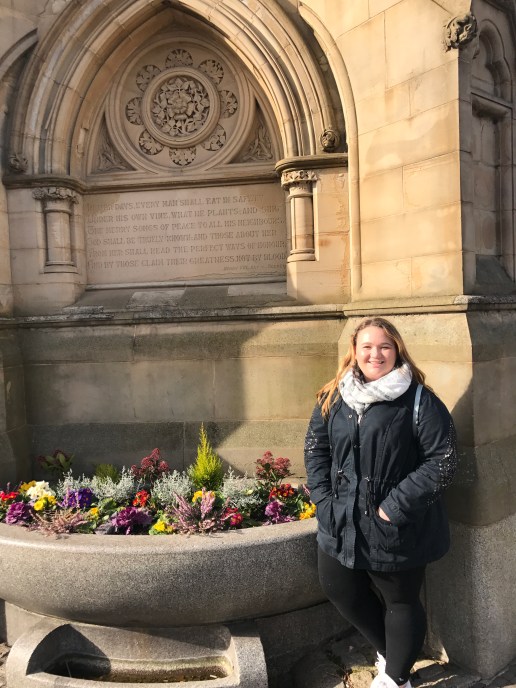
At the moment, I have two more papers to write for my Oxford tutors as I enter into the 8th week. By the end of this term, I will have written 7 papers on the political consequences of the English Reformation and 7 papers on international law. Plus, I have written 3 lengthy outlines. As you can imagine, it is hard to motivate myself to do any additional writing like this blog. But, I have not just been in the library these past few weeks. I have explored Stratford upon Avon, Warwick Castle, Hampton Court, and London (again!). Stratford upon Avon was worth the day trip. Below is a picture of me and the “American Fountain” which was paid for by an American to honor Shakespeare.
While in Stratford upon Avon, I visited Shakespeare’s birthplace, his home, and his grave with a friend from the OSAP program named Marie.
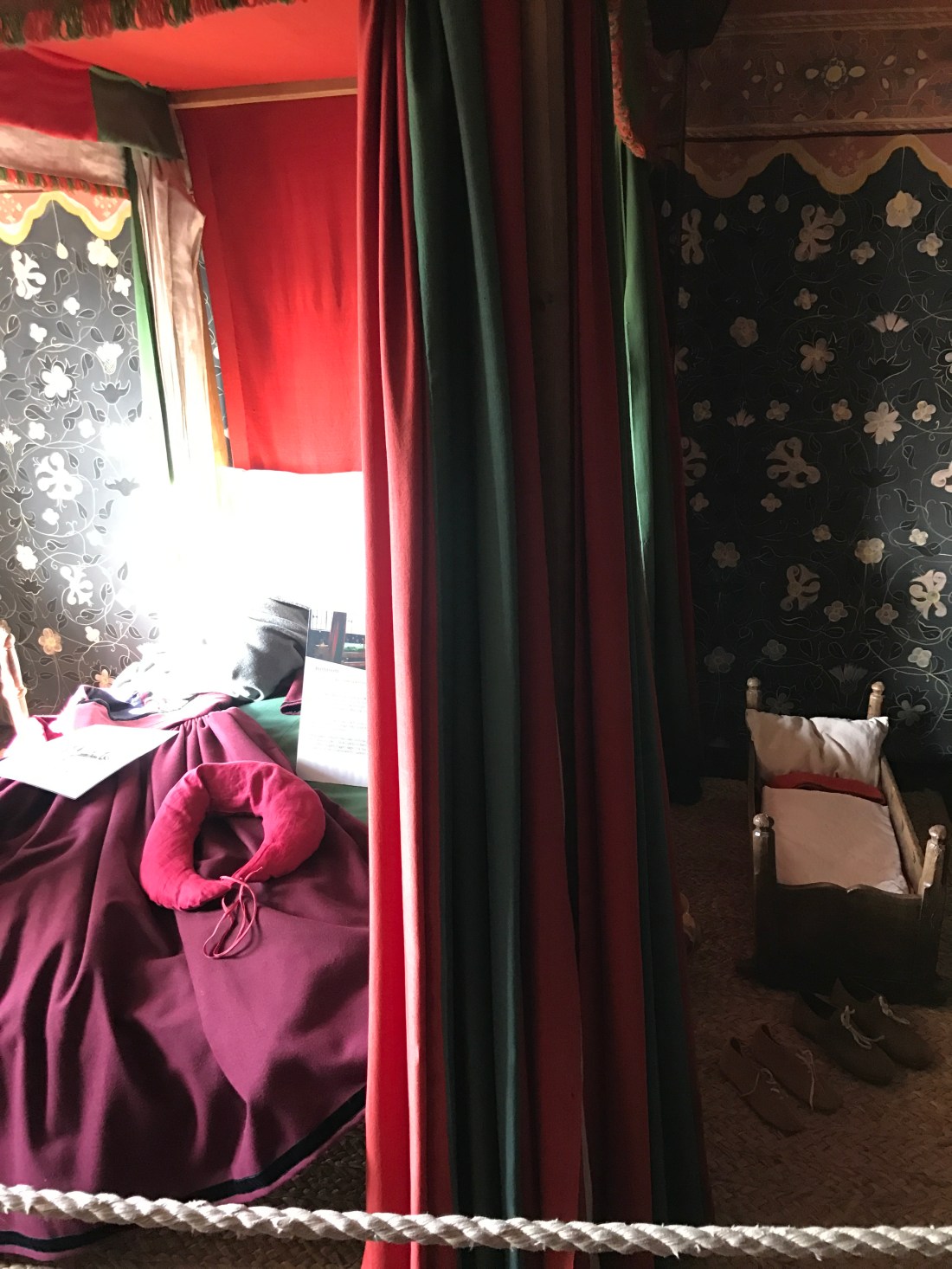
(Above is a picture of the very room Shakespeare was born. The guide told us that in this time, the bigger bed in the photo is where at least 5 people would sleep in order to keep warm at night. After all, in this time, England had a time of the night when all fires had to be extinguished. In fact, the french origin of the word curfew means fire cover, so the time the fires went out would be the time when people were meant to sleep. The main reason behind this was to limit the chance of fires in the night. )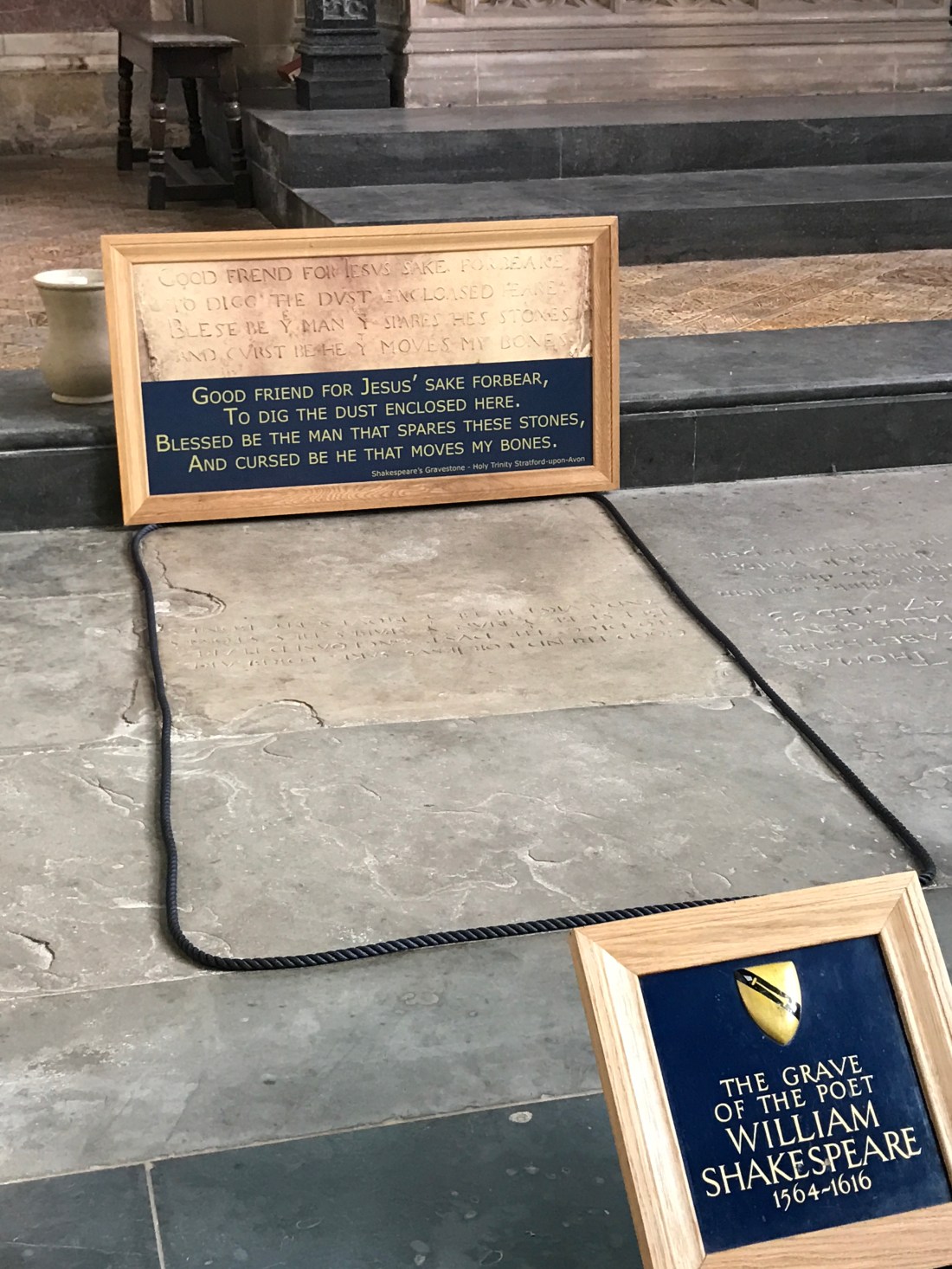
(Above is a photo of William Shakespeare’s grave in Holy Trinity Church. Holy Trinity Church is where Shakespeare was baptized, married and buried. )
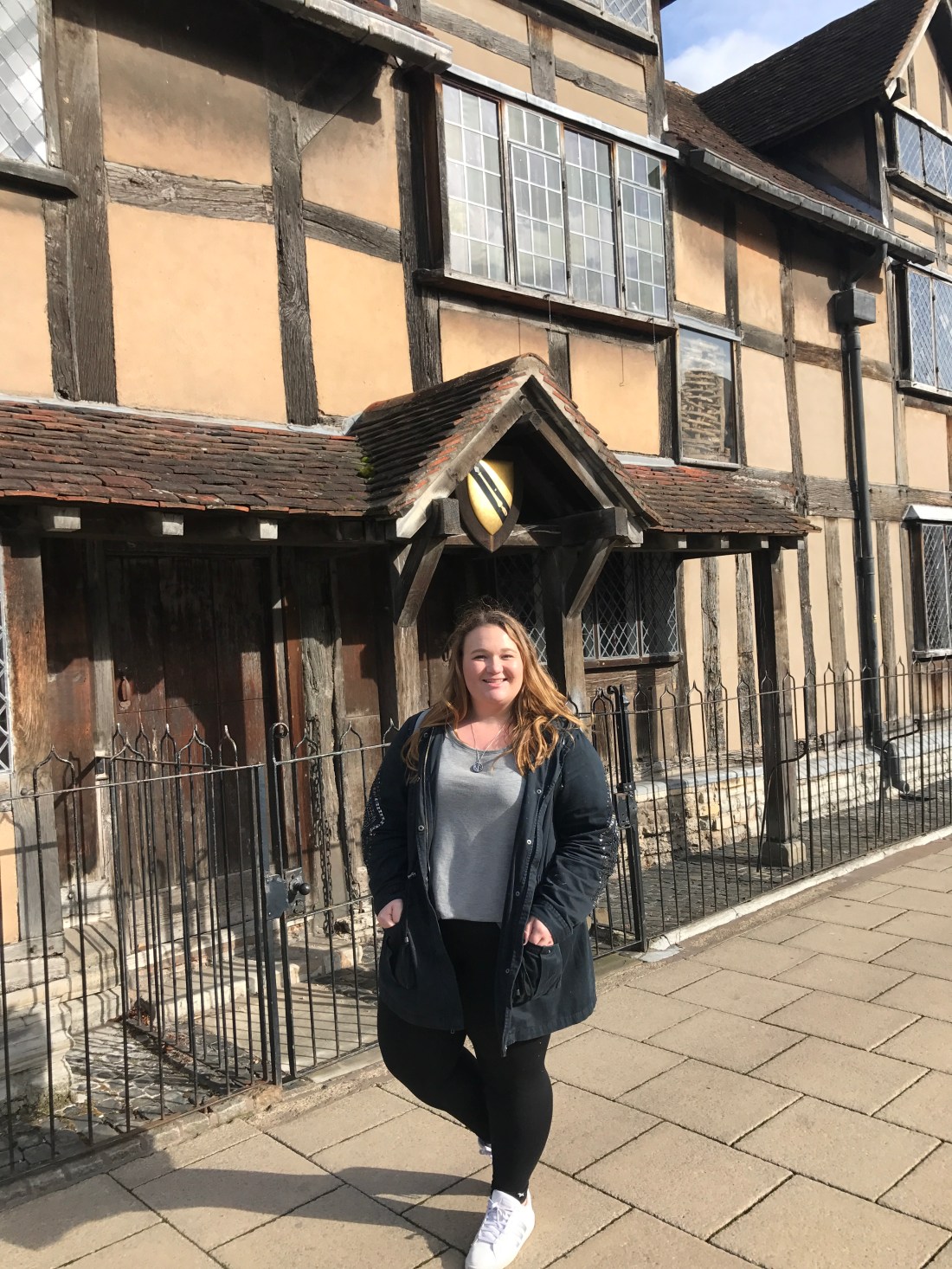
(Above is a picture of me in front of Shakespeare’s birthplace. For many years authors would make pilgrimages to visit this site. I’m not author, but it was still very cool to see.)
It was the perfect day to do the walking route to all of the famous locations because the sun decided to show up! We also stopped to have afternoon tea which has become a favorite activity of mine. Who knew that tea time was so much fun!

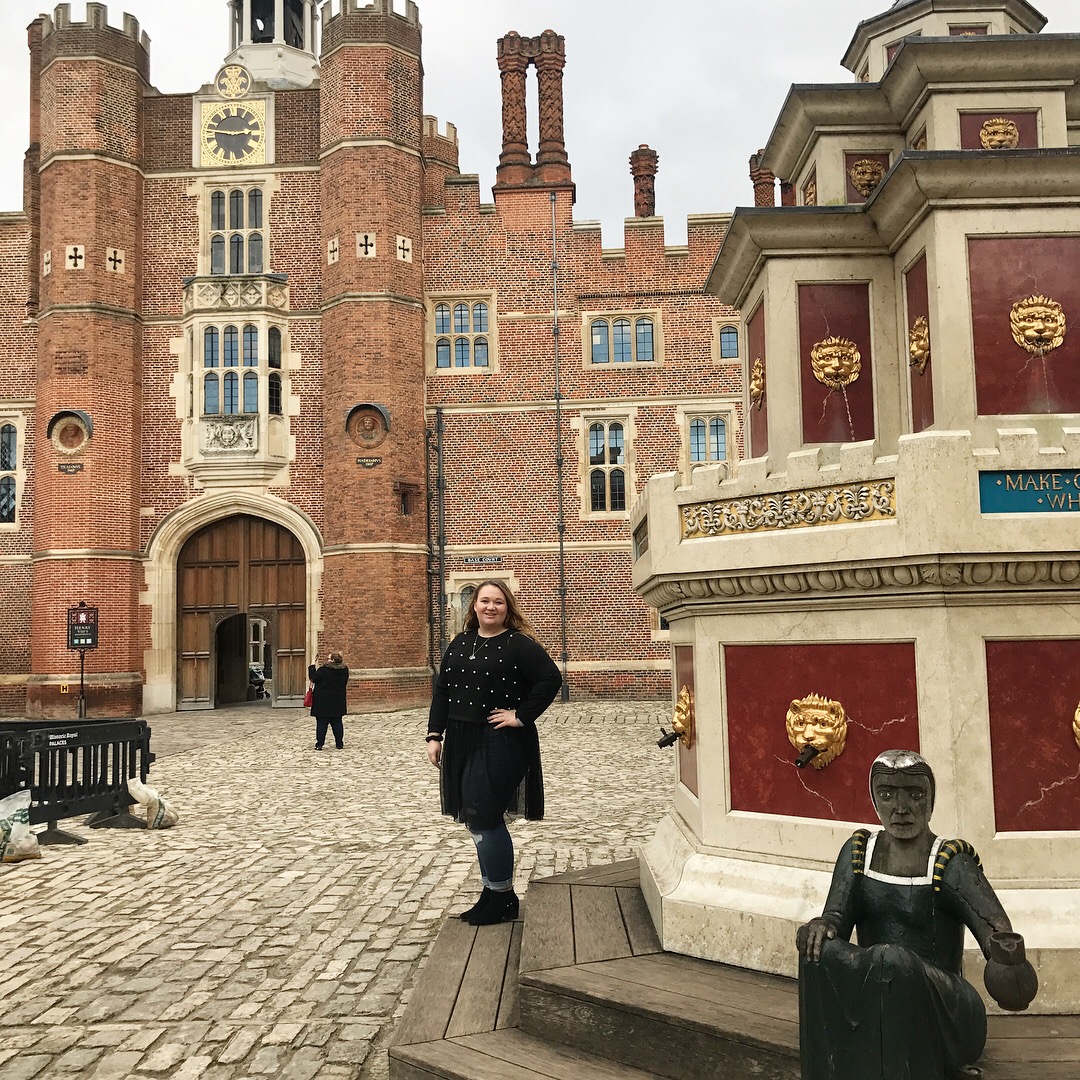
Onto the next adventure! Hampton Court have been on my list of places to see for quite some time. Hampton Court was built by Cardinal Wolsey, but ultimately gifted to Henry VIII.
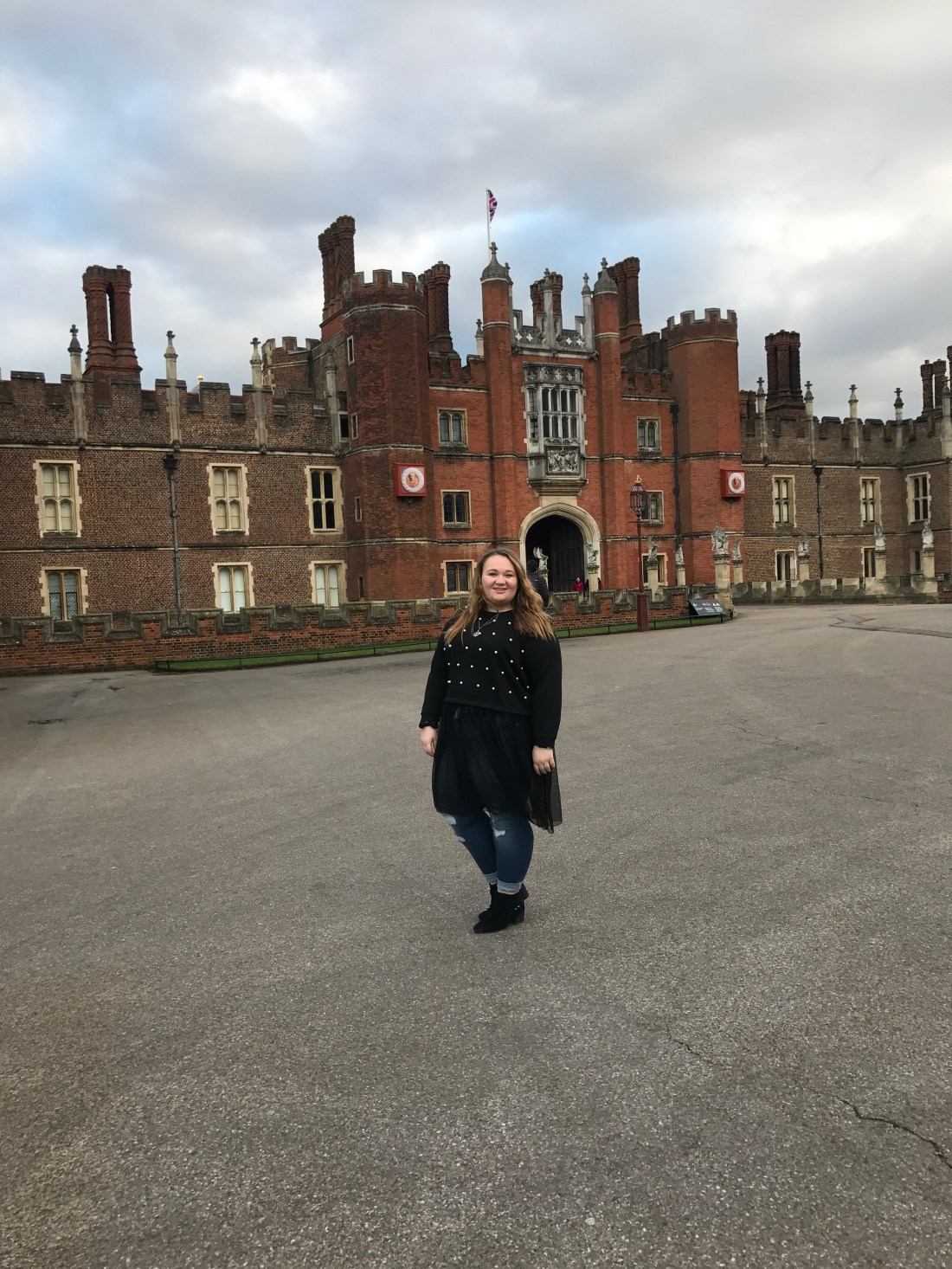
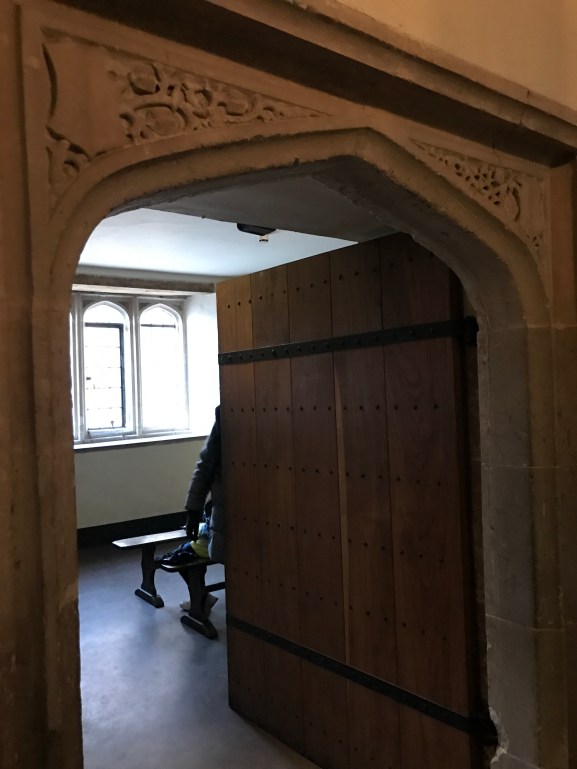
This giant palace was a favorite residence of Henry VIII and holds traces of all his eight wives. A stone doorway still shows the symbol of the marriage of Catherine of Aragon and Henry VIII whose ultimate divorce required Henry VIII to leave the Catholic Church.
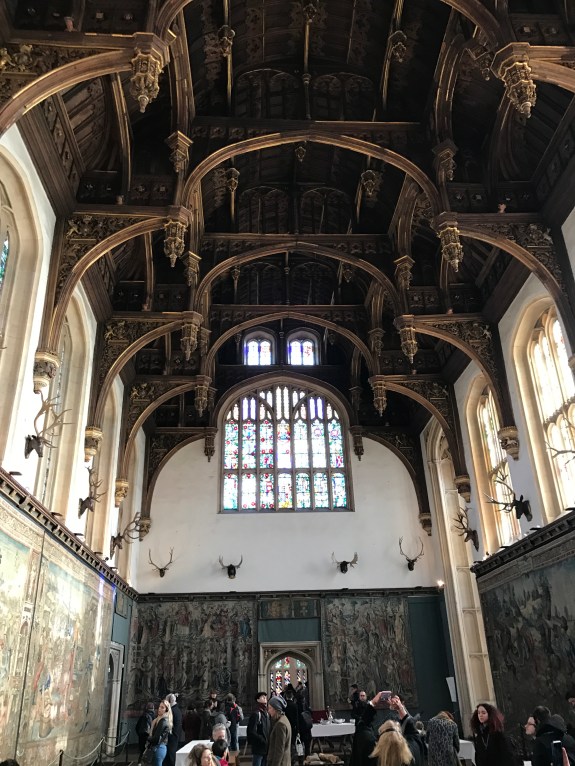
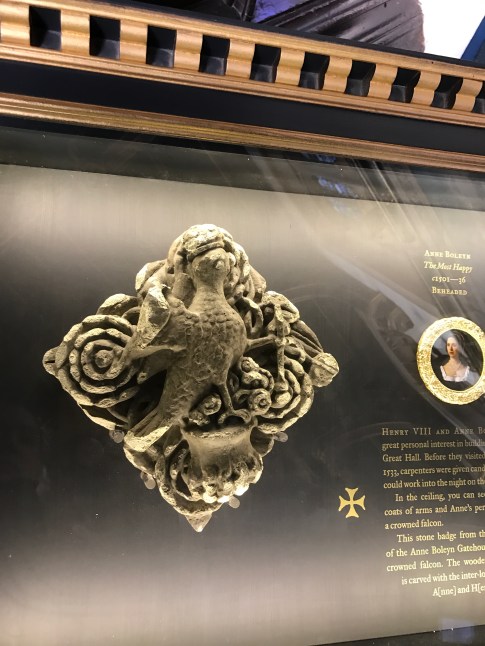
There is some leftover molding in the great hall which bears the crest of Henry VIII and Anne Boleyn that was accidentally not destroyed after her execution.
Jane Seymour, often considered Henry VIII’s favorite wife, mostly due to the fact that she provided him a male heir, Edward VI, sadly died during child birth. Henry VIII was so in love with her that he placed her heart beneath the stone alter of Hampton Court’s Chapel. Plus, the ghost of Catherine Howard is said to haunt a hallway where she attempted to beg the King for her life prior to her execution. In the end, Hampton Court is a place of grandeur, but one where your proximity to Henry VIII could have landed you on the chopping block.
Next Stop: Warwick Castle

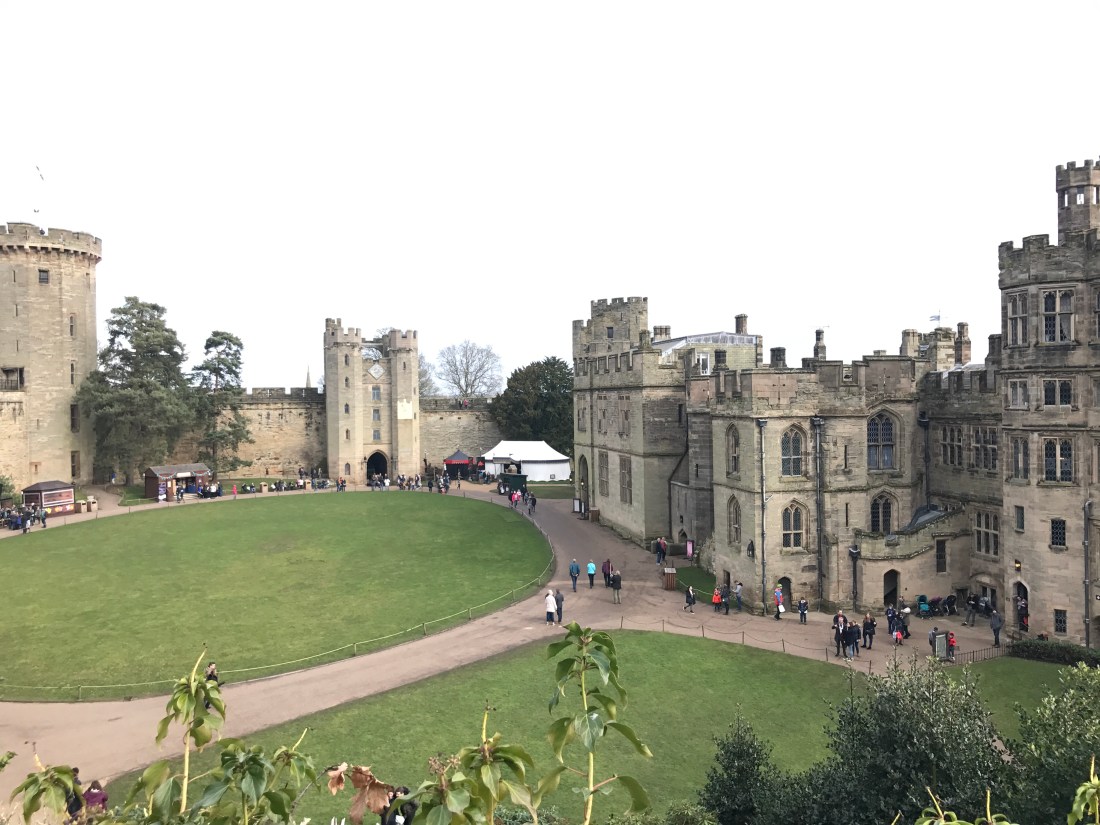
Warwick Castle was a recent discovery of mine, but in a way a full circle moment of my life. As many of you know, ancestry has been a passion of mine for quite a few years. In addition to constructing quite a large family tree, I even took a DNA test last winter. In my research, I discovered a link to ancient English royalty and nobility through my Pop’s great-grandmother Idella V Ward. The Ward line can be traced all the way back to the Massachusetts Bay Colony and back into England. Thomas Beauchamp, 11th Earl of Warwick, is my 20th great grandfather and he was born in 1314.
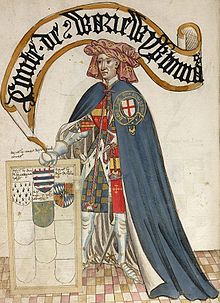
(Above is a representation of Thomas Beauchamp)
Guy de Beauchamp, 10th Earl of Warwick, is my 21st great grandfather and he was born in the year 1272. Obviously the line continues farther with William Beauchamp, 9th Earl of Warwick, who is my 22nd great grandfather, close friend of Edward I and first Beauchamp earl of warwick. William Beauchamp inherited Warwick from an uncle named William Maudit, 8th Earl of Warwick.
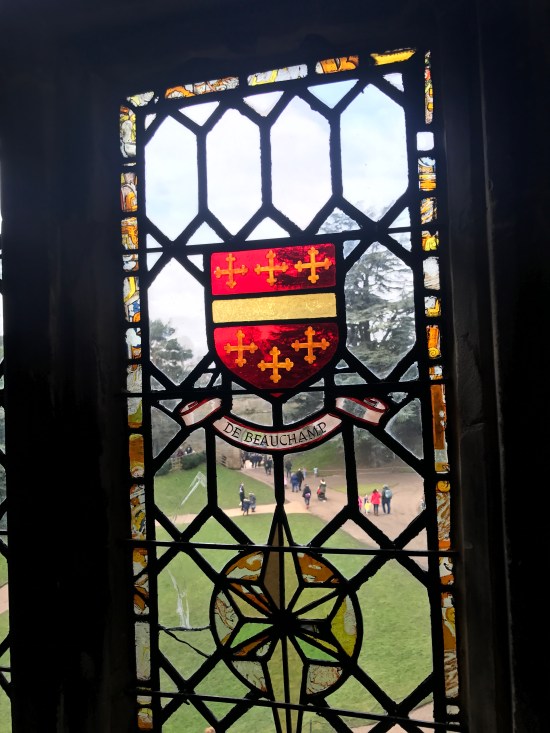
(Above is a picture of the family crest in a window of Warwick castle)
While the Beauchamp family had ties in Warwick Castle, Thomas Beauchamp, 11th Earl of Warwick, is also known for having contributed the funds to rebuild the Collegiate Church of St. Mary’s. For this reason, Thomas Beauchamp and his wife have a effigy in the center of the Church which I was able to see.


When traveling with my parents, I hope to continue the trend of tracing the steps of my ancestors by visiting the Tower of London, which was where my 15th great grandfather, Edward Neville Lord van Bergavenny was executed for treason by Henry VIII. Unlike my executed 15th great grandfather, I only received a light punishment with some time in the the stocks.

Elizabeth Beauchamp was married to Edward Neville. Via the line of Edward Neville, Edward I King of England is my 22nd great grandfather, Edward II King of England is my 21st great grandfather, and Edward III King of England is my 20th great grandfather. One thing Guy Beauchamp was most known for doing was murdering the favorite of Edward II, Piers Gaveston. This means that my two 21st great grandfathers hated each other. Clearly, this is pretty confusing to most of you, but I think it’s interesting to try to share.
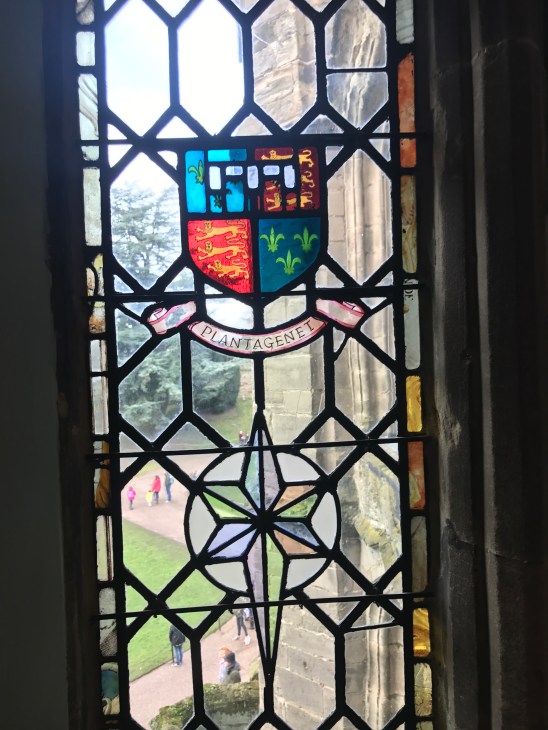
(Above is the crest of Edward I, II, and III)
Last weekend, my friend Jessie who is studying abroad in Rotterdam, Netherlands took the long trek to the UK to pay me a visit, so I got to use my skills as a tour guide to show her around Oxford.
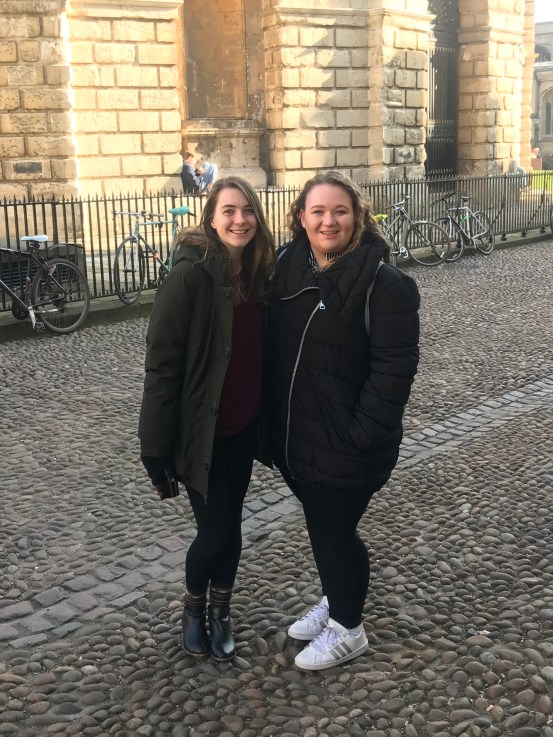
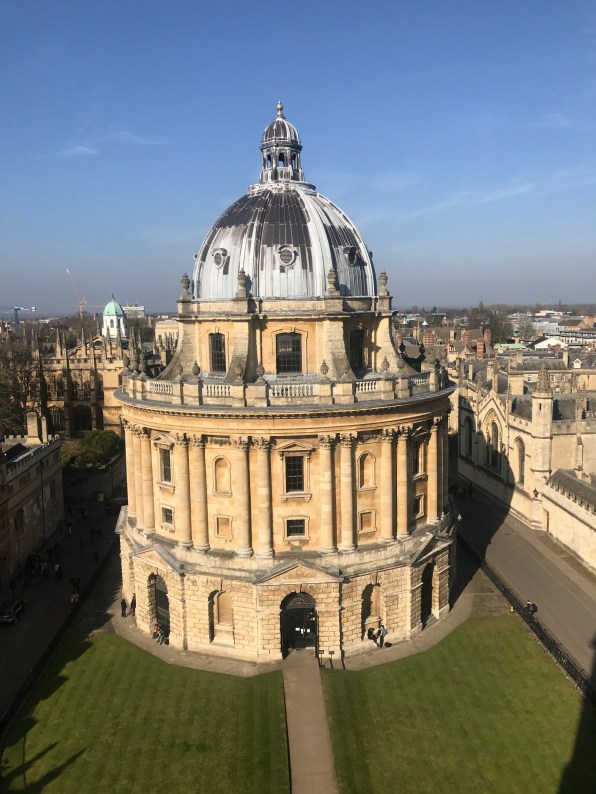
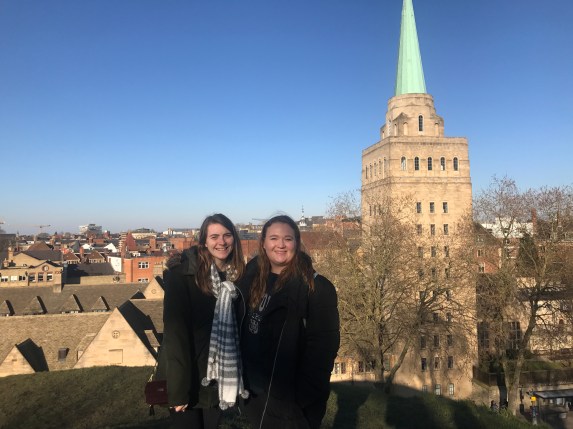
We climbed the top of the university church and had an amazing view of the city.

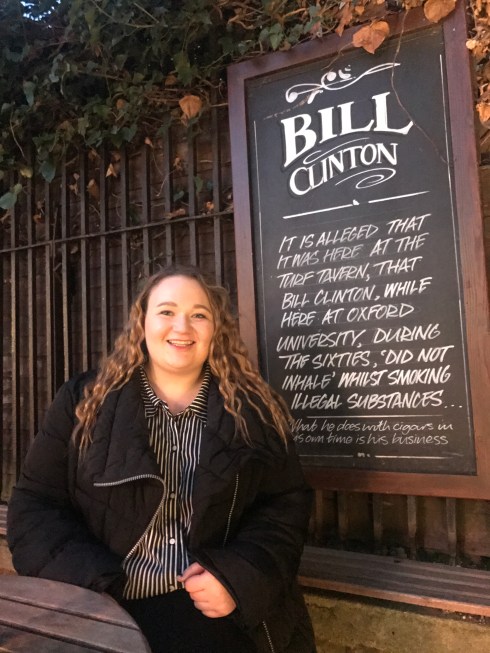
We visited the famous Turf Tavern where ghosts roam, Harry Potter Cast drank, and where Bill Clinton did not inhale.
Also, we visited Oxford Castle, which was built by the Normans and used as a prison from 1785 to 1996. It is now a tourist attraction where a man dressed like John Snow will guide you through the tower, the old prison area, and old chapel and crypt.
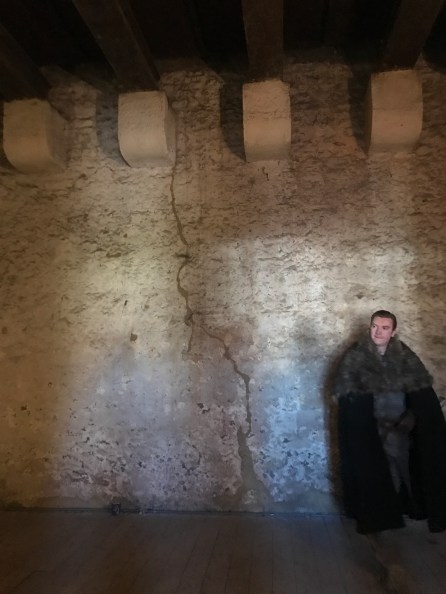
It was a fun weekend and a nice break from the stress of tutorials.
My friend Alex from Mason and I will be traveling together to Reykjavik, Iceland and Helsinki, Finland from March 10th to March 18th. I am looking forward to the thermal lagoons, a game of thrones filming tour, and exploring new countries. After all, I am only in Europe for another 2 months. The goal is to travel as much as possible. After my spring break, I have a 3 week long Mason led anthropology course which should be interesting. With three weeks includes 3 weekends and possible trips to Dublin, Paris and maybe even Rome. After this 3 week intermission, I will be traveling to Amsterdam and Rotterdam to visit my friend Jessie and experience her home away from home. If everything goes well, I will be traveling to one more country before my parents arrive in Heathrow airport April 14th. I plan to give my parents a taste of my time in Europe by showing them Oxford, London, and exploring an unfamiliar city for me, Edinburgh, together. Alright everyone, this is me signing off. I’ll write again soon!

 Alicia's Adventures